SKU: 4990294038
pachira money tree plant

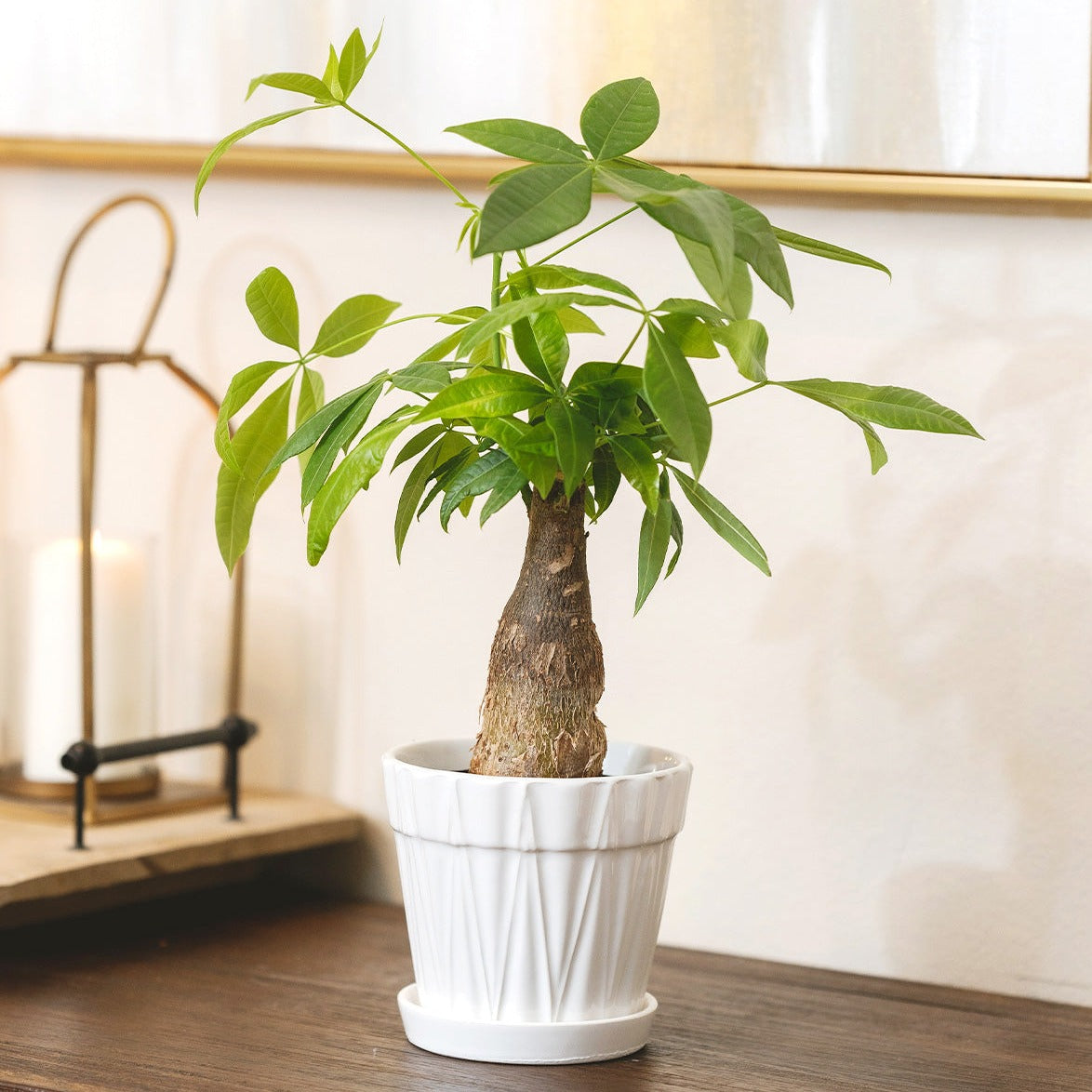
pachira money tree plant Pachira Stump Money Tree

Sale price$22.09 Regular price$24.54
Save 10%

Pay in installments of $6.13 with ShopPay, AfterPay and Klarna

Shipping Estimate
USA
  • USA
  • CAN

Ships within 48 hours · Estimated delivery Sep 23 - Sep 28

Promo Codes Available:

For Your Every Summer RSVP, with Code: SUMMER15

Description

pachira money tree plant Pachira Stump Money TreeDescription Light Soil Water Hardiness Native to central and south America, Pachira Stump Money Tree, or Pachira aquatica, is a part of the Malvaceae family. In its natural habitat, this tropical evergreen tree can grow up to 65 feet. Money Tree's long thin five lobed leaves form an umbrella shape above its trunk. The most interesting thing about Money Tree plant is that, unlike most tropical houseplants, it doesn't require a lot of water. It stores

  • Native to central and south America, Pachira Stump Money Tree, or Pachira aquatica, is a part of the Malvaceae family. In its natural habitat, this tropical evergreen tree can grow up to 65 feet. Money Tree's long thin five-lobed leaves form an umbrella shape above its trunk.

    The most interesting thing about Money Tree plant is that, unlike most tropical houseplants, it doesn't require a lot of water. It stores water in its chunky trunk.

    In Chinese Feng Shui, Money Tree is a symbol of luck and prosperity, as good fortune is believed to be trapped within this plant's trunk, and the number five in its five-lobed leaves is also a lucky number. It is also useful in purifying your indoor air!

    Money Stump Tree isn't likely to bloom indoors, but a matured Pachira aquatica growing in an ideal outdoor condition can produce yellow flowers and edible nuts.

     
  • Money Tree likes bright, indirect sunlight, as harsh direct sunlight may scorch its leaves. It needs 4-6 hours of light daily, and too little light would stunt its growth. This plant tolerates fluorescent light, so it makes for a perfect office plant.

    This plant needs less water than an average houseplant, as it can store water in its trunk.Water only when the top 2'' of the soil is dry and drain well after each watering to avoid root rot. Water thoroughly and let the soil dry out between waterings.

    This plant prefers well-draining soils. Use a peat moss-based potting mix and add some perlite for a good drainage.

    Money Tree thrives in temperatures between 65°F-80°F. Like most houseplants, it needs a humidity level of at least 50% all year round. Use a humidifier and mist your plant when the weather is dry, especially during winter.

    This plant should be fertilized once per month during the growing season (spring/summer) with diluted houseplant fertilizer.

     
  • USDA Zone 10-12

    USDA Zone 9b: to -3.8 °C (25 °F)

    USDA Zone 10a: to -1.1 °C (30 °F)

    USDA Zone 10b: to 1.7 °C (35 °F)

    USDA Zone 11: above 4.5 °C (40 °F)

Shipping Notes
  • Free Standard Shipping on $100+ Orders to the USA.
  • Except Preorder products are shipped in 48 hours.
  • Delivery to the USA:
  1. Standard Shipping : 3-10 business days
  • If time is of the essence, please consider selecting expedited delivery for faster service.
Exchange/Return Notes
  • We offer a 30-day return/exchange service after receiving.
  • Final sale items are not eligible for returns or exchanges.
  • To process your return/exchange, please contact us at [email protected]
  • Please click here for more details>>> Return & Exchange Policy
SKU: 4990294038

Discover Niche Categories That Outsell pachira money tree plant

Top-Converting Item to Boost Your Average Order

4.5 ★★★★★
Based on 12 reviews
Sort
Highest Rating
Newest First
Oldest First
Product Reviews
M
McM
West Palm Beach, US
★★★★★ 4
This book celebrates the uniqueness of us all and the acceptance of individuality.
Romping through in a proper town filled with identical dachshunds wearing matching outfits we find Odd Dog. A dachshund sporting a long rainbow scarf and tasseled hat, riding a bike, and playing a guitar (in a violin ensemble). After determining that she's "not made like all the rest," the story follows her as she sets out to find where she belongs. The bright, colorful illustrations have a lot of fun playing with the humor of long dachshund dogs, especially on the last couple of pages, that end in a satisfying affirmation of the joy of being yourself.
WAS THIS REVIEW HELPFUL?YesReportShare
Reviewed in the United States on December 23, 2019
H
Verified Purchase
Helen
Charlottesville, US
★★★★★ 5
I love all the illustration in this book not only the ...
Format: Paperback
I love all the illustration in this book not only the story. Worth buying and read it to your kids.
WAS THIS REVIEW HELPFUL?YesReportShare
Reviewed in the United States on February 9, 2018
R
Verified Purchase
Rachael Maresh
Bozeman, US
★★★★★ 5
Perfect for Little Learners!
Format: Board book
My toddler loves these books! The bright colors and real pictures inside are wonderful to help my child learn about new topics, she is always asking for a new National Geographic book!
WAS THIS REVIEW HELPFUL?YesReportShare
Reviewed in the United States on January 28, 2024
A
Verified Purchase
Ayrl
Massapequa, US
★★★★★ 5
Toddler approved!
Format: Board book
My 2 year old loves this book! The pictures are beautiful, he's learned the names of all of the bugs, and it's a nice small size that's easy to read using one hand with my toddler in my lap before bedtime. I bought this when he was around 18 months old and it is still a hit.
WAS THIS REVIEW HELPFUL?YesReportShare
Reviewed in the United States on June 12, 2021
T
Verified Purchase
Tommy Girl
Carnegie, US
★★★★★ 5
Great book!
Format: Board book
I really like this book it includes: ladybug, bumblebee, praying mantis, firefly and (monarch) butterfly. So a good selection of bugs a small child is likely to experience in their yard or park in North America. For the photo board book aged children I really prefer that they discuss vocabulary that the child will be able to use to describe the world around them so I appreciate that most kids will see most of these bugs fairly easily and frequently. I did question the praying mantis since I see them much less frequently than the other bugs in the book but my husband said it is an exciting bug when kids do see it so he supports the choice--I think a fly or mosquito might have been a somewhat more useful choice as far as vocabulary our son could use most often. I liked that they did say the butterfly was a monarch but typically used butterfly so if a child lives where other butterflies are more common they learned the more general term. I think fireflies are less common in some regions but they are so magical as a small child that I think it is a good choice.
WAS THIS REVIEW HELPFUL?YesReportShare
Reviewed in the United States on April 2, 2018

recommand products