SKU: 8246625577
black seed comes from which plant

black seed comes from which plant Kalonji (Black Seed/Nigella) – Truelove Seeds

Sale price$22.50 Regular price$25.00
Save 10%

Pay in installments of $6.25 with ShopPay, AfterPay and Klarna

Shipping Estimate
USA
  • USA
  • CAN

Ships within 48 hours · Estimated delivery Aug 23 - Aug 28

Promo Codes Available:

For Your Every Summer RSVP, with Code: SUMMER15

Description

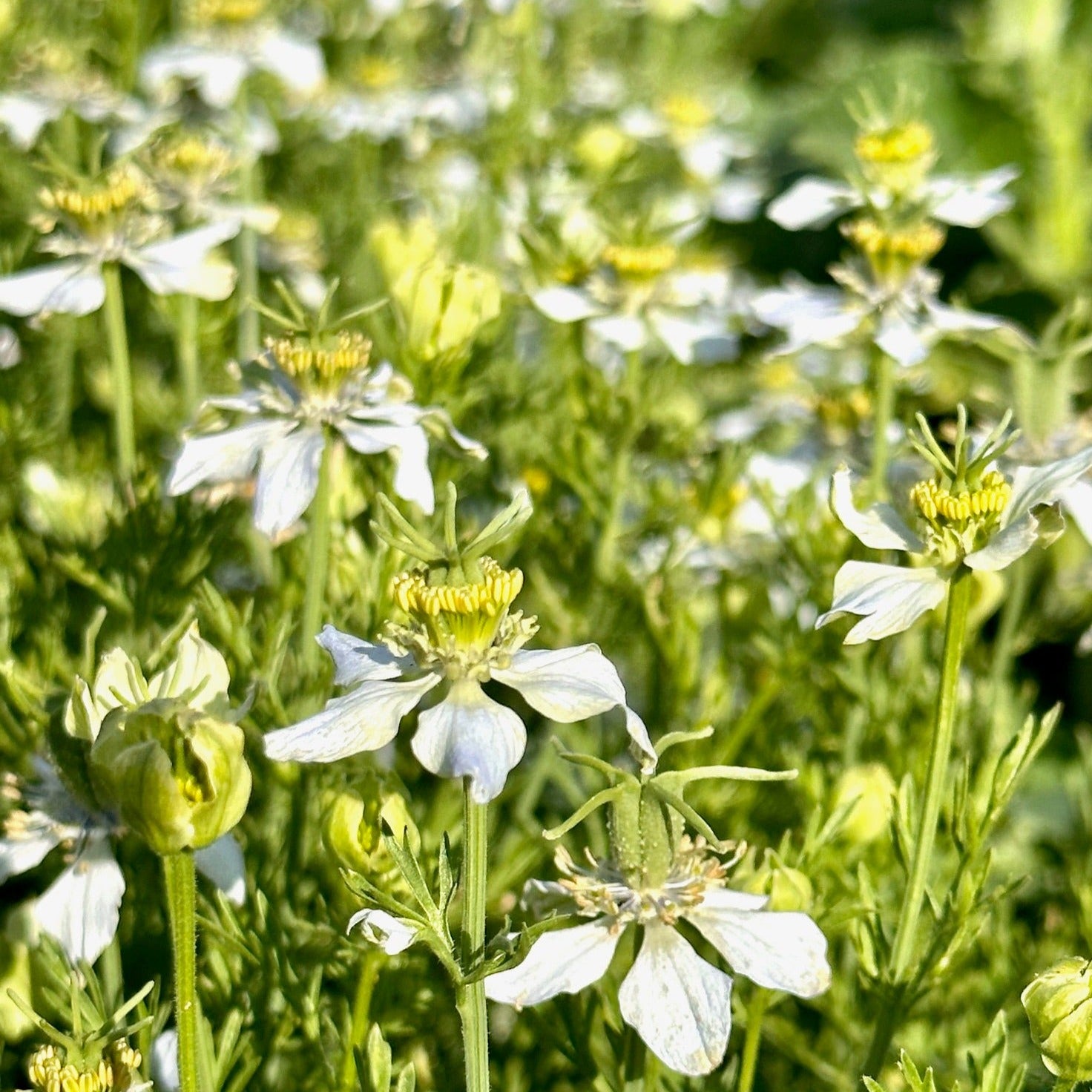
black seed comes from which plant Kalonji (Black Seed/Nigella) – Truelove SeedsKalonji, also known as Black Cumin, Black Seed, and Nigella is a highly medicinal spice used in South Asian and Middle Eastern cuisine. In the Tibb e Nabwi, the Muslim medicinal guide, 7 Nigella seeds a day is said to be the cure for all diseases except death. The seeds are also delicious when used on naan, curries, roasted vegetables or pickles. The plant resembles the common garden flower, Love in a mist, with delicate fennel like foliage and stands

Kalonji, also known as Black Cumin, Black Seed, and Nigella is a highly medicinal spice used in South Asian and Middle Eastern cuisine. In the Tibb-e-Nabwi, the Muslim medicinal guide, 7 Nigella seeds a day is said to be the cure for all diseases except death. The seeds are also delicious when used on naan, curries, roasted vegetables or pickles. The plant resembles the common garden flower, Love-in-a-mist, with delicate fennel like foliage and stands 10-12" tall. During peak bloom the plant sends out dozens of five or six petaled white flowers that are highly attractive to bees. Over the course of a week, the seed pod slowly begins to balloon up and develop as it is pollinated. It is a lovely sight and a wonderful activity to sit in the garden and watch as the bees are hard at work!

Days to maturity: 60 days to peak bloom. 80 days to dry seed pod.

Seeds per pack: 90-95

Germination rate: 96% on 02/13/2025

Planting / harvesting notes

We have found that these seeds do not transplant well. To plant, simply sprinkle seeds on top of soil surface and scratch seeds in or gently use a rake to bury seeds slightly. Plants do not need to be accurately spaced but aim for 2-4" between plants. No thinning is required. For best results, it's best to wait until the weather has warmed and the last chance of frost is long gone. Keep soil moist until first signs of germination. If hand watering, be careful not to drown seeds while watering. It can be helpful to cover seeds with floating row cover or cardboard for the first week to help keep the soil surface moist. Seeds should germinate in 7-10 days.

Flowers can be harvested for fresh flower bouquets. At full maturity, the seeds pods will turn brown and become papery. The plants can be used at this stage in dried flower bouquets.

Seed keeping notes

Seeds are fully mature once the seed pod has turned brown and papery. If growing for the spice or seed saving, the seeds can be extracted by opening up the papery seed pod. Dozens of seeds will be in each seed pod. Collect all the seed pods and crush them by either stepping on them on top of a tarp or by crushing them with your hands. Seeds can be separated from the chaff with a fan.

If you live in an area with a short growing season and the pods have not had enough time to fully develop, you can harvest each plant by cutting the stems at soil level and placing them in a large paper bag. Avoid getting any water or soil in the paper bag. Pods will continue to develop over the course of a month. Make sure to keep the bag in a dry and warm location. Check on the bag every week to make sure they are drying properly. Seeds will be fully mature once the pod has dried fully.

Shipping Notes
  • Free Standard Shipping on $100+ Orders to the USA.
  • Except Preorder products are shipped in 48 hours.
  • Delivery to the USA:
  1. Standard Shipping : 3-10 business days
  • If time is of the essence, please consider selecting expedited delivery for faster service.
Exchange/Return Notes
  • We offer a 30-day return/exchange service after receiving.
  • Final sale items are not eligible for returns or exchanges.
  • To process your return/exchange, please contact us at [email protected]
  • Please click here for more details>>> Return & Exchange Policy
SKU: 8246625577

Discover Niche Categories That Outsell black seed comes from which plant

Top-Converting Item to Boost Your Average Order

4.6 ★★★★★
Based on 6 reviews
Sort
Highest Rating
Newest First
Oldest First
Product Reviews
A
Verified Purchase
Auntie J
Draper, US
★★★★★ 5
Tons of info!
Format: Paperback
If one wanted to be a real tracker, this book has everything needed. I just want to be able to recognize the local wildlife tracks. But having all the rest of the info is nice, and it's easy to take what I want. The book is well organized. Fantastic pictures, loads of information. It's interesting too, to see just how much knowledge goes into figuring out not only what animal it is, but what sex, age, gait, etc it is. This is an awesome book.
WAS THIS REVIEW HELPFUL?YesReportShare
Reviewed in the United States on January 18, 2025
A
Verified Purchase
Amazon Customer
Dallas, US
★★★★★ 5
Caveats for the professional tracker
Format: Paperback, Format: Paperback
This is a most excellent resource, arguably the best single tracking book that exists (i would argue so, if i had to pick one! And i recommend this book often). However, if you are in a professional field where this legally matters (EIS or ESA decisions on wolverine/fisher/lynx, etc.), take heed: the authors’ methods of measuring tracks are confusing (i.e. - where is the line between substrate/mammal family to determine when claws or ‘posterior’ pads are or are not used in measuring tracks? ) Also, the claim that “an individual animal can show incredible variation in track size” (p.57) is very misleading… Foot size of an individual animal from birth to adult will obviously change, but will not change in a day for the same-aged individual animal regardless of whether it walks in mud or atop rock. The animal’s foot does not change in size, but its track might appear to. This perceived “change” could be easily avoided by using minimum outline measurements (which are not discussed in this book, but can be found in the work by J. Halfpenny and others). I understand their reasons, but please do not refer to this book for legally defensible measuring techniques of rare species!!!! Also please disregard the negative reviewer who said “it’s a very Mythological Approach to how animals move and walk (jsopel),”- they clearly don’t know what that word means… All in all a well-researched and fantastic book that comes from ample and legitimate experience. A great book and happy tracking!
WAS THIS REVIEW HELPFUL?YesReportShare
Reviewed in the United States on August 15, 2021
N
Verified Purchase
Naturelover
Lowell, US
★★★★★ 5
A must have for wildlife lovers
Format: Paperback
Wow! What an excellent and thorough compilation of scat and tracks. Nice reference for when you take pics and bring the image back to the book for comparison. Also, great information about tracking.
WAS THIS REVIEW HELPFUL?YesReportShare
Reviewed in the United States on June 10, 2025
A
Verified Purchase
Allison
San Leandro, US
★★★★★ 4
Good but index needs improvement
Format: Paperback
This is a good, comprehensive guide to tracks and sign. However, there is no index of where to find each family, so in order to find a species you have to flip through the entire book looking for the right page. This makes it annoying to use if you are trying to look up information on a particular species or family.
WAS THIS REVIEW HELPFUL?YesReportShare
Reviewed in the United States on April 2, 2026
E
Verified Purchase
ed calvin
Dallas, US
★★★★★ 5
This is a very useful field manual for those interested in detailed traking methodology.
Format: Paperback
I spent many years as interpreter and ranger for the Colorado State Park System, now called CPW—Colorado Parks and Wildlife. We were annually tasked with surveying a given species' presence, density, and range in the park system and surrounding areas. Detailed field manuals were critical to the accuracy of our work, and HOW I WISH I HAD THIS BOOK DURING THAT PART OF MY CAREER. There are few other books I've come across providing detailed, yet very accessible information on how trail sign reflects animal behavior across different conditions, landscapes, and seasons (both weather seasons and mating seasons). One particular aspect of this book I found significantly intriguing was the section on predation—how does a mountain lion take down a mule deer vs. how wolves bring one down. The locations on a prey animal where a certain predator is most likely to attack, showing illustrations, is a remarkable piece of work, and there authors are clearly masters of interpreting tracks and sign! If you want learn about how mammals behave in their native environment, adding this book to your field manual packet will greatly expand your horizons! Busy it, read it, and get outside! Thank you Mr. Elbroch and Mr. McFarland for adding to the wildlife canon!
WAS THIS REVIEW HELPFUL?YesReportShare
Reviewed in the United States on August 5, 2023

recommand products